Welcome

My name is Simon Schatz and I'm from Vienna / Austria. I'm a hobby aviation illustrator and historian. In 'normal' life I'm a technical employee in an architect's office. In 2002 my first aircraft profile, a Focke Wulf Fw 190 A-8, was published in an aviation book. Since then many more of my color profiles were published around the globe. Here I want to show you a small selection of these color profiles. Hope you enjoy the visit. I would appreciate getting comments and critiques regarding my artwork. You will find a guestbook at the bottom of the page. Feel free and write me an email: simon_der_flieger (at) yahoo (dot) de

Important note:

This website is dedicated to show planes flown by the German Luftwaffe during the Second World War. It's a source for historians, modellers and aviation enthusiasts. The planes at that time had swastikas on their tails. I just use them because of historical correctness. It's not my intention to glorify the Luftwaffe nor the Nazi regime it represented. I want to make clear that I strictly reject all Nazi ideals.

© Copyright Information:

Please note that all material within this website is protected under copyright and is for personal use only. If you want to use anything for books, magazines, websites etc. please contact me! email: simon_der_flieger (at) yahoo (dot) de

May 3, 2013

Junkers Ju 88 A-4/Torp, 3Z+OH “Otto”, 1./KG 77, Salon de Provence, spring 1944

Click on the profile to get a larger version.

Markings:

3Z+OH “Otto”, 1./KG 77, Salon de Provence, spring 1944

References:

Flugzeug Classic Feb. 2011
Torpedoflieger im Mittelmeer
Lino von Gartzen

Additional informations:

The Ju 88 A-4/Torp with the code 3Z+OH, flown by pilot Günther Hirschfeld, navigator Eugen Belz, shooter Hermann Wünsche and radio operator Werner Schröder, was transfered from Grieslienen via Frankfurt to France on March 21st 1944. From the Mediterranean Sea cost allied convoys should be attacked. The first raid the with the 3Z+OH was flown in the night from March 31st to April 1st 1944 about 80 kilometers north from Algier. Target was the convoy UGS36. 13 more raids were flown near the Algerian cost before the crew got new orders. From June 6th 1944, the landing allied troops in the Normandie, more and more raids were flown in the English Channel. The last effort was achieved on 31st July 1944 during a raid near Algier. Some days later the “Otto” was completely destroyed an ground by two low flying P-51 Mustang. The crew of the “Otto” flew 21 raids. Significant because 30% of all planes were lost during each raid at this time. Pilot Günther Hirschfeld said: “We had a full squadron of guardian angels!”

The plane was camouflaged in RLM 70/71/65 overpaintd with RLM 70 and RLM 76.

Acknowledgments:

The base drawing was made by Maciej Noszczak. Thank you for the kind permission to use your drawing.

Harald Belz, the son of naviagtor Eugen Belz asked me to do this profile for him. It was a great challenge for me to paint this really special camouflaged plane, but with the information Mr. Belz got from his father it was possible to reconstruct it as best as possible.

March 31, 2013

Focke Wulf Fw 190 A-9, flown by III./KG(J)27, Wels, February 1945

Click on the profile to get a larger version.

Markings:

Focke Wulf Fw 190 A-9, W.Nr. 206000, White 2, flown by III./KG(J) 27, Wels, February 945

References / profiles:


Wings of the Black Cross Vo. 3 / Mark Proulx, Eagle Editions

Additional informations:
 
This Fw 190 A-9 with the unusual W.Nr. 206000 was flown by III./KG(J) 27. On 20 February 1945 the plane had an accident with 15% damage during rolling on the ground. The plane had a RLM 74/75/76 camouflage with the Green and White checker fuselage band.

A censored version of this profile was published in the book:

Die Deutsche Luftwaffe in Österreich
Stationierungen und Fliegerbodenorganisation 1938-1945 - Verluste September 1943 bis Mai 1945
Hans and Martin Handig
ÖFH
ISBN 978-3-200-02675-9

October 7, 2012

Messerschmitt Me 410 A-3 flown by 1.(F)/Aufkl.Gr 33, May 1945

Click on the profile to get a larger version. Base drawing made by Otterkins2

Markings:

Messerschmitt Me 410 A-3, 8H+WH, flown by 1.(F)/Aufkl.Gr 33, München-Riem, May 1945

References / profiles:

Captured Eagles Vol. I, Roger Gaemperle, Vintage Eagle Publishing

This colour profile was published in the book:

Captured Eagles Volume I
German WWII Aircraft captured by the Allies
Roger Gaemperle
Vintage Eagle Publishing
ISBN 978-3-033-03007-7


September 12, 2012

Messerschmitt Bf 109 K-4 flown by II./JG 52, May 1945

Click on the profile to get a larger version. Base drawing made by Otterkins2

Markings:

Messerschmitt Bf 109 K-4, Yellow 5, Ainring Airfield and Salzburg-Maxglan, May 1945

References / profiles:

Captured Eagles Vol. I, Roger Gaemperle, Vintage Eagle Publishing
Wings of the Black Cross No. 4, Mark Proulx, Eagle Editions Ltd.


Additional informations:

"Yellow 5" was captured in May 1945 at Ainring Airfield in South Germany. Later the plane got U.S. markings and was transfered to Salzburg-Maxglan. There the plane ended on a scrapyard.
The plane was camouflaged in RLM 75/83/76. The spinner was overall black or maybe RLM 70. The plane had typical Luftflotte 4 markings as the yellow band around the engine cowling and the yellow rudder. Interesting is the fact that the "Yellow 5" was just painted on the port side of the fuselage. Below the horizontal tail "mdj 24.4.45" was painted on with white paint. This was the manufacture code for FMW Flugzeug- und Metallbauwerke Wels, were the plane was repaired.

The U.S. version of this colour profile was published in the book:

Captured Eagles Volume I
German WWII Aircraft captured by the Allies
Roger Gaemperle
Vintage Eagle Publishing
ISBN 978-3-033-03007-7


February 17, 2012

He 162 A-2 flown by 3./JG 1, Leck, May 1945

Click on the profile to get a larger version.

Markings:
Heinkel He 162 A-2, W.Nr. 120074, Yellow 11 with small White 20, Leck, May 1945

References / profiles:

Heinkel He 162 - From Drawing Board to Destruction
Robert Forsyth / Eddie J. Creek, Classic Publication

Der Teufel über den Wolken?
Peter Rodeike, Jet & Prop 1/2012

Additional informations:

This machine was the personal aircraft of Oblt. Karl-Emil Demuth. The camouflage is typical for the Heinkel Rostock production line. The nose was painted in red-white-black with the arrow painted in red on both sides of the nose. The aircraft also carried the "Devil in the Clouds" emblem of I./JG painted below the cockpit. According the newest references the base colour of the emblem was yellow. The number "11" was painted in yellow, immediately followed by a small "20" in white. On the fin were painted 16 white vitory bars representing vitories Demuth had achieved before flying the He162, as well as the aircraft's Werknummer in white.

The older version of this colour profile was published in the book:

Heinkel He 162
From Drawing Board to Destruction
Robert Forsyth / Eddie J. Creek
Classic Publication
ISBN 978-1-90653-700-5


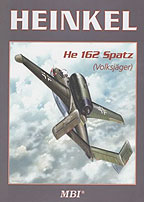
My special thanks go to Miroslav Bily and Michal Bradac for the kind permission to use their drawings as base for my work. They were taken from Miroslav Balous and Miroslav Bily's publication:

Heinkel He 162 Spatz (Volksjäger)
MBI Publications
ISBN 80-86524-06-X

August 15, 2011

Junkers Ju 88 C-6 flown by 13./KG40, France, Summer 1943

Click on the profile to get a larger version.

Markings:

F8+BX, flown by 13./KG40, Lorient airfield, France, Summer 1943

References / profiles:

Junkers Ju 88 Vol. III
Krzysztof Janowicz, Kagero

Additional informations:

In Summer of 1942 the losses of allied Ships in the Atlantic caused by German U-Boats were tremendous. Every month more and more ships were sent to the bottom. For their raids the U-Boats had to pass the Bay of Biscay, but this area was patrolled by allied aircraft. Because of this increasing threat on July 1st the Stab V./KG 40 was formed. This Geschwader, equipped with Junkers Ju 88 C planes, should "solve" the problem.
The aircraft represented here was stationed at Lorient airfield in summer of 1943. No other details are known.
The plane was camouflaged in RLM 70/71/65 with RLM 76 mottles.

Base drawing made by Maciej Noszczak. Thank you for the kind permission to use your drawing.

August 12, 2011

Junkers Ju 87 des Schlachtgeschwaders 2

The Planes:

Junkers Ju 87 G-2 W.Nr. 494110, <-+-, Stab/SG 2
Junkers Ju 87 D-5 W.Nr. unknown, +TU, 10. (Pz)/SG 2
Junkers Ju 87 D-5 W.Nr. unknown, +VU, 10. (Pz)/SG 2


References / profiles:

Luftwaffe over Czech Territory 1945
Jiri Rajlich Stanislav Kokoska, Ales Janda, JAPO pages 121 to 127


History:

On the May 8th 1945 the remnants of the staff flight and the 2nd Gruppe of SG 2 decided to disband near Lake Kummer on Czech territory (Bohemia). In order to avoid becoming Russian prisoners of war they decided to fly as much personnel as possible to the closest airfield (Kitzingen) occupied by the Americans. Seven aircraft take off. The rest of personnel have to risk making it the hard way-walking. The convoy was almost wiped out and only a few manage to escape. The seven aircraft are also attacked by Russian fighters but were able to escape without losses. After about two hours they land in Kitzingen and six officer, six sergeants and one female civilian surrender to the Americans.


List of the aircraft and personnel that landed in Kitzingen:

Ju 87G-2 "<- + -", W.Nr. 494110, Stab/SG 2 Col. Hans-Ulrich Rudel and Capt. Ernst-August Niermann
Ju 87D-5, + TU, 10.(Pz.)/SG 2 master sergeant, sergeant, female civilian
Ju 87D-5, + VU, 10.(Pz.)/SG 2 First Lieutenant Hans Schwirblat
FW 190A-8, "<<", W.Nr. 171189, Stab II./SG 2, Major Karl Kennel
FW 190A-6, "White 2", W.Nr. 550503, 4./SG 2
FW 190F-8, "White 9", W.Nr. 585584, 4./SG 2
FW 190F-8, "White 12", W.Nr. 583234, 4./SG 2


Additional informations:

Ju 87G-2 W.Nr. 494110, Black <-+-, Stab/SG 2

The aircraft flown by Hans-Ulrich Rudel was painted RLM 70/71/65. The wing commander’s markings were painted black with a white border. The crosses and swastika were painted in the simplified fashion of the last months of the war. The six digit work number was painted black. The spinner originally painted RLM 70 was supplemented with a white spiral. The tail plane had two white diagonal lines, common on SG 2 aircraft. The left wing still had the yellow V. These served to identify Luftflotte 4 aircraft. Hans-Ulrich Rudel crash landed this aircraft in order not to hand the Americans an air worthy machine.

Ju 87D-5 W.Nr. unknown, +TU, 10. (Pz.)/SG 2
This aircraft transported amongst others a civilian female, probably a girlfriend of one of the crew members. It was probably for this reason that the aircraft was not deliberately crash landed. The aircraft was also painted RLM 70/71/65. The former call letters and yellow fuselage band were probably painted over with RLM 02. The rear main landing gear pants were also painted the same way. Crosses and swastika were the same as on Rudel’s machine. The yellow V under the left wing and the two white lines on the tail plane were also there. Further peculiarities of this aircraft were a mounted glider tow, no dive brakes. Noticeable are the missing Geschwader call letters T6.

Ju 87D-5 W.Nr.unknown, +VU, 10. (Pz)/SG 2
The machine flown by First Lieutenant Schwirblat was also crash landed and rendered unflyable. The camouflage was slightly different from the other aircraft. The fuselage band was painted over; crosses and swastika had a black border. Geschwader markings were also missing.


I want to thank Andrey Arthy who gave permission to use the information from his website http://fw190.hobbyvista.com/kitzingen.htm as a basis for my article.

These three colour profiles were published in the book:


Junkers Ju 87 Stuka
Robert Michulec / Matthew Willis
Mushroom Model Publications
ISBN 978-83-89450-49-4